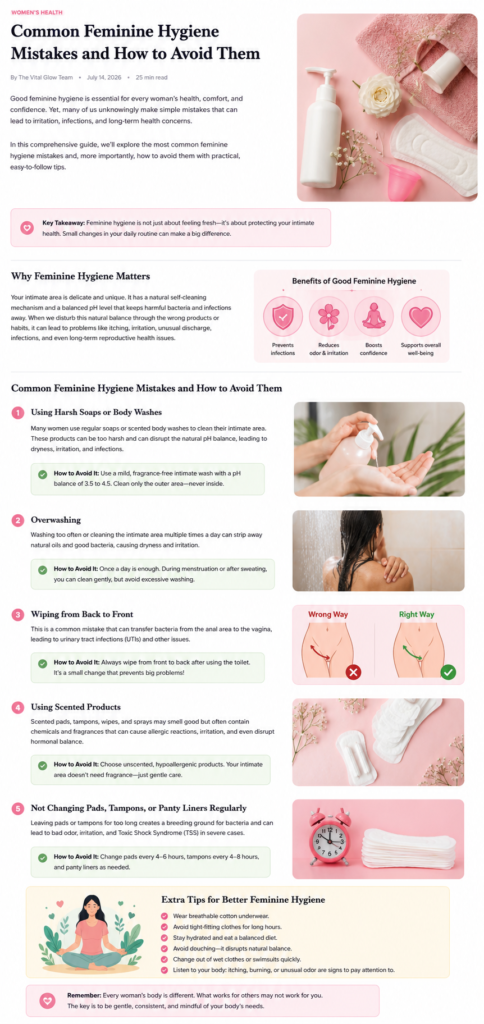
Good feminine hygiene is an essential part of every woman’s overall health and well-being. Yet, despite having access to more information than ever before, many women unknowingly make hygiene mistakes that can lead to discomfort, irritation, infections, and even long-term health issues.
The intimate area is delicate and has its own natural cleaning system. When this balance is disrupted by improper hygiene practices, harsh products, or unhealthy habits, it can affect vaginal health and increase the risk of infections.
The good news is that maintaining proper feminine hygiene doesn’t have to be complicated. Small changes in your daily routine can make a significant difference in keeping your body healthy, comfortable, and confident.
In this comprehensive guide, we’ll explore the most common feminine hygiene mistakes women make and provide practical solutions to help you maintain optimal intimate health.
Why Feminine Hygiene Matters
Before discussing common mistakes, it’s important to understand why feminine hygiene is crucial.
The vagina naturally maintains a balanced environment through healthy bacteria and a slightly acidic pH level. This natural balance helps prevent harmful bacteria, yeast infections, and unpleasant odors.
When proper hygiene practices are followed, women can enjoy:
- Better vaginal health
- Reduced risk of infections
- Improved comfort
- Increased confidence
- Better reproductive health
- Less irritation and discomfort
Understanding how your body works is the first step toward making informed hygiene choices.
1. Using Harsh Soaps and Body Washes
One of the most common feminine hygiene mistakes is using regular soaps, scented body washes, or strong cleansers on the intimate area.
Many commercial soaps contain chemicals, fragrances, and detergents that can disrupt the natural pH balance of the vagina. This disruption may lead to dryness, itching, irritation, and infections.
Why It’s Harmful
The vaginal area is sensitive and doesn’t require aggressive cleansing. Harsh products can remove beneficial bacteria that protect against harmful microorganisms.
How to Avoid It
- Use mild, fragrance-free cleansers.
- Wash only the external genital area.
- Avoid antibacterial soaps unless recommended by a healthcare professional.
- Choose products specifically formulated for sensitive skin.
Remember, the vagina cleans itself naturally and doesn’t require internal washing.
2. Overwashing the Intimate Area
Many women believe washing multiple times a day keeps them cleaner. In reality, excessive washing can do more harm than good.
Overwashing strips away natural oils and beneficial bacteria that help maintain vaginal health.
Signs of Overwashing
- Dryness
- Itching
- Redness
- Increased sensitivity
- Irritation
How to Avoid It
- Wash the external area once daily.
- During menstruation or after exercise, gentle additional cleaning is acceptable.
- Use lukewarm water rather than hot water.
Maintaining balance is more important than excessive cleanliness.
3. Using Scented Feminine Products
Many feminine hygiene products are marketed with fragrances to provide a “fresh” feeling. However, scented products often contain chemicals that can irritate sensitive tissues.
Products to be cautious about include:
- Scented pads
- Scented tampons
- Feminine sprays
- Perfumed wipes
- Deodorizing powders
Why It’s Harmful
Fragrances can trigger:
- Allergic reactions
- Skin irritation
- Burning sensations
- pH imbalance
Better Alternative
Choose unscented and hypoallergenic products whenever possible.
Natural freshness comes from maintaining a healthy vaginal environment—not masking odors with perfumes.
4. Wearing Tight Clothing Too Often
Fashion choices can sometimes affect intimate health.
Skin-tight leggings, synthetic underwear, and restrictive clothing create warm and moist conditions that encourage bacterial and yeast growth.
Potential Problems
- Increased sweating
- Irritation
- Fungal infections
- Yeast infections
How to Avoid It
- Choose breathable cotton underwear.
- Avoid wearing sweaty clothes for long periods.
- Change out of workout clothes promptly.
- Give your skin time to breathe.
Comfortable clothing supports a healthier intimate environment.
5. Not Changing Menstrual Products Frequently
During menstruation, changing sanitary products regularly is essential.
Leaving pads, tampons, or menstrual cups unchanged for extended periods creates an environment where bacteria can multiply.
Risks
- Unpleasant odors
- Irritation
- Infections
- Toxic Shock Syndrome (TSS) in rare cases
Best Practices
- Change pads every 4–6 hours.
- Change tampons every 4–8 hours.
- Empty menstrual cups according to manufacturer instructions.
- Wash hands before and after changing products.
Maintaining menstrual hygiene is one of the most important aspects of feminine care.
6. Wiping from Back to Front
This mistake is more common than many people realize.
Wiping from back to front can transfer bacteria from the anal area to the vagina and urethra.
Possible Consequences
- Urinary tract infections (UTIs)
- Vaginal infections
- Irritation
Correct Technique
Always wipe from front to back after using the toilet.
This simple habit significantly reduces the risk of infection.
7. Ignoring Changes in Vaginal Discharge
Vaginal discharge is normal and plays an important role in maintaining vaginal health.
However, sudden changes in color, smell, or consistency may indicate an infection or other health concern.
Warning Signs
- Strong fishy odor
- Green or yellow discharge
- Cottage cheese-like texture
- Accompanying itching or burning
What to Do
Monitor changes and consult a healthcare professional if symptoms persist.
Early attention can prevent complications.
8. Sleeping in Tight Underwear
Your body benefits from airflow, especially during sleep.
Wearing tight underwear overnight can trap moisture and heat.
Better Habits
- Wear loose-fitting cotton underwear.
- Consider sleeping without underwear if comfortable.
- Choose breathable sleepwear.
Allowing air circulation helps maintain a healthy environment.
9. Staying in Wet Clothes for Too Long
Whether it’s after swimming, exercising, or sweating heavily, staying in damp clothing creates conditions favorable for bacterial growth.
Common Issues
- Fungal infections
- Skin irritation
- Unpleasant odors
Prevention Tips
- Change out of wet swimsuits promptly.
- Remove sweaty workout clothes after exercising.
- Dry thoroughly before changing clothes.
Small habits like these help maintain intimate health.
10. Douching the Vagina
Many women mistakenly believe douching helps clean the vagina.
In reality, healthcare professionals generally discourage douching because it disrupts the natural balance of bacteria.
Risks of Douching
- Increased infection risk
- Pelvic inflammatory disease
- Irritation
- pH imbalance
Healthier Approach
Allow the vagina to clean itself naturally.
Gentle external cleansing is usually all that’s needed.
11. Using Unclean Razors for Hair Removal
Personal grooming is a personal choice, but hygiene during hair removal is essential.
Using old or dirty razors may introduce bacteria into the skin.
Potential Problems
- Razor burns
- Folliculitis
- Skin infections
- Ingrown hairs
Best Practices
- Use a clean razor.
- Replace blades regularly.
- Shave in the direction of hair growth.
- Moisturize afterward.
Proper grooming hygiene reduces irritation.
12. Ignoring Hydration and Nutrition
Feminine hygiene isn’t only about external care.
Your diet and hydration levels can influence overall intimate health.
Foods That Support Women’s Health
- Yogurt with probiotics
- Fresh fruits
- Vegetables
- Whole grains
- Lean proteins
Importance of Hydration
Drinking enough water helps:
- Flush toxins
- Support urinary health
- Maintain healthy body functions
Healthy habits inside the body contribute to better hygiene outside.
13. Wearing the Wrong Underwear Material
The fabric you wear daily matters more than you might think.
Synthetic materials may trap moisture and heat.
Best Choice
Cotton underwear is often recommended because it:
- Allows airflow
- Absorbs moisture
- Reduces irritation
Additional Tips
- Change underwear daily.
- Replace worn-out underwear regularly.
- Wash with mild detergent.
Choosing breathable fabrics can improve comfort significantly.
14. Self-Diagnosing Every Problem
The internet provides valuable information, but not every symptom should be self-treated.
Many conditions have similar symptoms.
For example:
- Yeast infections
- Bacterial vaginosis
- Sexually transmitted infections
May all cause discomfort but require different treatments.
Better Approach
Seek professional medical advice if symptoms persist or worsen.
Proper diagnosis ensures effective treatment.
Building a Healthy Feminine Hygiene Routine
A good feminine hygiene routine doesn’t require expensive products or complicated steps.
Daily Routine
- Wash the external area gently.
- Wear clean cotton underwear.
- Stay hydrated.
- Change clothes after sweating.
- Practice proper toilet hygiene.
During Menstruation
- Change menstrual products regularly.
- Wash hands frequently.
- Stay hydrated.
- Monitor unusual symptoms.
After Exercise
- Shower promptly.
- Change into dry clothing.
- Clean the external intimate area gently.
Consistency is more important than complexity.
Common Feminine Hygiene Myths
Myth 1: The Vagina Needs Special Internal Cleaning
False. The vagina naturally cleans itself.
Myth 2: Strong Fragrances Mean Better Hygiene
False. Fragrances often cause irritation.
Myth 3: Daily Discharge Is Unhealthy
False. Normal discharge is a sign of a healthy reproductive system.
Myth 4: More Washing Means Better Hygiene
False. Overwashing can disrupt natural balance.
Myth 5: All Feminine Products Are Safe
False. Some products contain irritating chemicals and fragrances.
Understanding facts helps women make healthier choices.
When to Consult a Doctor
Seek medical advice if you experience:
- Persistent itching
- Burning sensation
- Unusual discharge
- Strong odor
- Pain during urination
- Pelvic pain
- Recurrent infections
Prompt attention can prevent more serious health concerns.
Final Thoughts
Maintaining proper feminine hygiene is about supporting your body’s natural balance rather than trying to achieve perfection. Many common feminine hygiene mistakes stem from misinformation, aggressive cleansing practices, or marketing claims that encourage unnecessary products.
By choosing gentle care, wearing breathable clothing, maintaining menstrual hygiene, staying hydrated, and listening to your body’s signals, you can protect your intimate health and reduce the risk of infections and discomfort.
Every woman’s body is unique, so finding a routine that works for you is important. Focus on healthy habits, stay informed, and don’t hesitate to seek professional advice when needed.
Good feminine hygiene isn’t about feeling “perfectly fresh” all the time—it’s about keeping your body healthy, comfortable, and confident every day.