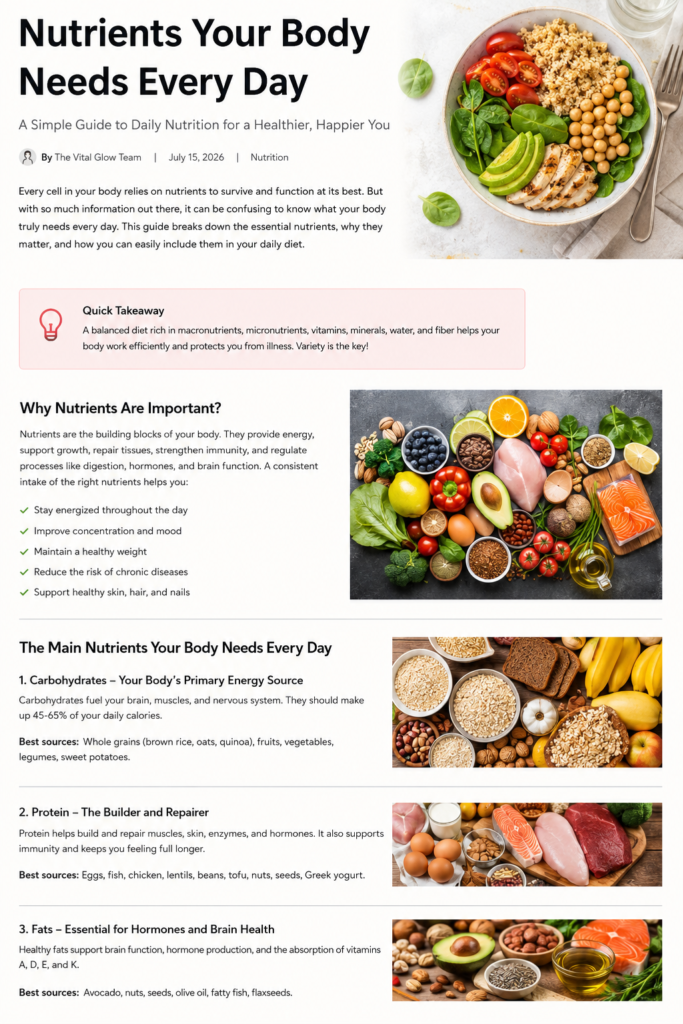
Have you ever wondered why some people seem energetic, healthy, and focused throughout the day while others constantly feel tired and sluggish? The answer often lies in nutrition. The foods you eat provide the nutrients your body needs to perform countless functions, from producing energy to repairing tissues and supporting immunity.
Every cell, organ, and system in your body relies on essential nutrients to function properly. Without the right balance of nutrients, your body may struggle to maintain energy levels, fight infections, build muscle, support brain function, and promote overall well-being.
In today’s fast-paced world, many people consume highly processed foods that may be convenient but lack essential nutrients. Understanding which nutrients your body needs every day can help you make healthier food choices and improve your quality of life.
This comprehensive guide explores the major nutrients your body requires daily, their benefits, food sources, and practical tips for maintaining a balanced diet.
Why Are Nutrients Important?
Nutrients are substances found in food that provide energy, support growth, repair tissues, and regulate bodily functions. They are the building blocks of life and are necessary for maintaining health.
Proper nutrition helps:
- Boost energy levels
- Strengthen the immune system
- Support brain function
- Maintain healthy skin and hair
- Build strong muscles and bones
- Improve digestion
- Reduce disease risk
- Support mental health
A deficiency in any essential nutrient can negatively affect your health and lead to various medical conditions.
The Six Essential Nutrients Your Body Needs Every Day
Nutrition experts classify nutrients into six main categories:
- Carbohydrates
- Proteins
- Fats
- Vitamins
- Minerals
- Water
Additionally, fiber plays a crucial role in maintaining digestive health.
Let’s explore each nutrient in detail.
1. Carbohydrates: Your Body’s Main Energy Source
Carbohydrates are often misunderstood, but they are the body’s preferred source of energy. When consumed, carbohydrates are broken down into glucose, which fuels your brain, muscles, and organs.
Benefits of Carbohydrates
- Provide energy for daily activities
- Support brain function
- Improve exercise performance
- Help maintain healthy digestion
- Prevent fatigue
Types of Carbohydrates
Simple Carbohydrates
These are quickly digested and provide rapid energy.
Examples:
- Sugar
- Honey
- Fruit juice
- Candy
Complex Carbohydrates
These contain fiber and digest slowly, providing sustained energy.
Examples:
- Brown rice
- Oats
- Whole wheat bread
- Quinoa
- Sweet potatoes
Best Sources of Healthy Carbohydrates
- Whole grains
- Fruits
- Vegetables
- Legumes
- Oats
- Brown rice
Daily Recommendation
Carbohydrates should make up approximately 45–65% of your daily calorie intake.
2. Protein: The Building Block of the Body
Protein is essential for growth, repair, and maintenance of tissues. It plays a key role in building muscles, producing enzymes, hormones, and supporting immunity.
Every cell in your body contains protein.
Benefits of Protein
- Builds and repairs muscle
- Supports immune function
- Promotes satiety
- Helps maintain healthy skin and hair
- Produces hormones and enzymes
High-Protein Foods
Animal Sources
- Eggs
- Fish
- Chicken
- Turkey
- Greek yogurt
- Milk
Plant Sources
- Lentils
- Chickpeas
- Beans
- Tofu
- Tempeh
- Nuts and seeds
Signs of Protein Deficiency
- Muscle loss
- Fatigue
- Weakness
- Frequent illness
- Slow wound healing
Daily Recommendation
Most adults need approximately 0.8 grams of protein per kilogram of body weight.
3. Healthy Fats: Essential for Overall Health
Many people avoid fats, but healthy fats are vital for proper body function. They support brain health, hormone production, and nutrient absorption.
Benefits of Healthy Fats
- Support brain function
- Protect organs
- Promote hormone production
- Aid vitamin absorption
- Improve heart health
Types of Fats
Healthy Unsaturated Fats
These are beneficial for health.
Sources include:
- Avocados
- Olive oil
- Nuts
- Seeds
- Fatty fish
Saturated Fats
Consume in moderation.
Sources include:
- Butter
- Cheese
- Red meat
Trans Fats
These should be avoided whenever possible.
Sources include:
- Processed foods
- Fried foods
- Commercial baked goods
Best Sources of Healthy Fats
- Salmon
- Walnuts
- Chia seeds
- Flaxseeds
- Almonds
- Avocados
- Olive oil
Daily Recommendation
Healthy fats should contribute approximately 20–35% of daily calorie intake.
4. Vitamins: Tiny Nutrients with Powerful Benefits
Vitamins are organic compounds that support numerous body functions. Although required in small amounts, they are critical for health.
Vitamin A
Benefits
- Supports vision
- Boosts immunity
- Promotes healthy skin
Sources
- Carrots
- Sweet potatoes
- Spinach
- Mangoes
Vitamin B Complex
B vitamins help convert food into energy.
Benefits
- Energy production
- Brain health
- Red blood cell formation
Sources
- Whole grains
- Eggs
- Dairy products
- Legumes
Vitamin C
Benefits
- Strengthens immunity
- Supports collagen production
- Acts as an antioxidant
Sources
- Oranges
- Lemons
- Strawberries
- Bell peppers
Vitamin D
Benefits
- Bone health
- Calcium absorption
- Immune support
Sources
- Sunlight
- Fatty fish
- Egg yolks
- Fortified foods
Vitamin E
Benefits
- Protects cells from damage
- Supports skin health
Sources
- Almonds
- Sunflower seeds
- Vegetable oils
Vitamin K
Benefits
- Blood clotting
- Bone health
Sources
- Kale
- Broccoli
- Spinach
5. Minerals: Essential for Body Functions
Minerals are inorganic nutrients required for numerous physiological processes.
Calcium
Benefits
- Strong bones and teeth
- Muscle contraction
- Nerve function
Sources
- Milk
- Yogurt
- Cheese
- Leafy greens
Iron
Benefits
- Oxygen transportation
- Energy production
Sources
- Lentils
- Spinach
- Red meat
- Beans
Signs of Iron Deficiency
- Fatigue
- Weakness
- Dizziness
- Pale skin
Magnesium
Benefits
- Muscle function
- Energy production
- Blood pressure regulation
Sources
- Nuts
- Seeds
- Whole grains
- Dark leafy greens
Potassium
Benefits
- Maintains fluid balance
- Supports heart health
- Regulates muscle contractions
Sources
- Bananas
- Potatoes
- Coconut water
- Avocados
Zinc
Benefits
- Immune support
- Wound healing
- Cell growth
Sources
- Pumpkin seeds
- Chickpeas
- Nuts
- Dairy products
6. Fiber: The Unsung Hero of Nutrition
Fiber is a type of carbohydrate that your body cannot digest.
It plays a major role in digestive health and disease prevention.
Benefits of Fiber
- Improves digestion
- Prevents constipation
- Supports heart health
- Controls blood sugar
- Helps with weight management
High-Fiber Foods
- Fruits
- Vegetables
- Whole grains
- Lentils
- Beans
- Chia seeds
Daily Recommendation
Adults should aim for:
- Women: 25 grams daily
- Men: 38 grams daily
7. Water: The Most Important Nutrient
Water is often overlooked despite being essential for survival.
Approximately 60% of the human body consists of water.
Benefits of Water
- Regulates body temperature
- Supports digestion
- Removes toxins
- Lubricates joints
- Maintains healthy skin
Signs of Dehydration
- Headaches
- Fatigue
- Dry mouth
- Dark urine
- Dizziness
How Much Water Should You Drink?
General recommendation:
- Women: 2.7 liters daily
- Men: 3.7 liters daily
Individual needs vary based on activity level and climate.
Nutrient-Rich Foods You Should Eat Daily
To ensure you’re getting essential nutrients, include these foods regularly:
Fruits
- Apples
- Bananas
- Oranges
- Berries
- Papaya
Vegetables
- Spinach
- Broccoli
- Carrots
- Tomatoes
- Bell peppers
Whole Grains
- Brown rice
- Oats
- Quinoa
- Whole wheat bread
Protein Sources
- Eggs
- Lentils
- Beans
- Fish
- Greek yogurt
Healthy Fat Sources
- Nuts
- Seeds
- Olive oil
- Avocados
Common Nutrient Deficiencies
Many people unknowingly suffer from nutrient deficiencies.
Iron Deficiency
Symptoms:
- Fatigue
- Weakness
- Poor concentration
Vitamin D Deficiency
Symptoms:
- Bone pain
- Muscle weakness
- Frequent illness
Vitamin B12 Deficiency
Symptoms:
- Memory problems
- Fatigue
- Tingling sensations
Calcium Deficiency
Symptoms:
- Weak bones
- Muscle cramps
Magnesium Deficiency
Symptoms:
- Muscle spasms
- Sleep issues
- Fatigue
How to Build a Balanced Daily Plate
A balanced meal should include all major nutrients.
Ideal Plate Method
Half Plate
Fill with:
- Vegetables
- Fruits
Quarter Plate
Fill with:
- Lean protein
Quarter Plate
Fill with:
- Whole grains
Add
- Healthy fats
- Water
This simple approach ensures nutritional balance.
Tips for Getting Enough Nutrients Every Day
Eat a Variety of Foods
Different foods provide different nutrients.
Choose Whole Foods
Focus on minimally processed foods.
Include Fruits and Vegetables
Aim for multiple colors daily.
Stay Hydrated
Drink water throughout the day.
Avoid Excess Sugar
Reduce sugary beverages and snacks.
Plan Your Meals
Meal planning helps maintain consistency.
Read Nutrition Labels
Check ingredients and nutrient content.
Sample One-Day Nutrient-Rich Meal Plan
Breakfast
- Oatmeal with berries
- Almonds
- Glass of milk
Mid-Morning Snack
- Apple
- Peanut butter
Lunch
- Brown rice
- Lentil curry
- Mixed vegetables
- Salad
Evening Snack
- Greek yogurt
- Chia seeds
Dinner
- Grilled fish or tofu
- Quinoa
- Steamed broccoli
Before Bed
- Warm milk
The Connection Between Nutrition and Disease Prevention
A nutrient-rich diet can significantly reduce the risk of chronic diseases.
Heart Disease
Healthy fats, fiber, and antioxidants support cardiovascular health.
Diabetes
Balanced nutrition helps regulate blood sugar.
Obesity
Nutrient-dense foods promote healthy weight management.
Osteoporosis
Calcium and vitamin D strengthen bones.
Cancer
Antioxidant-rich foods may help reduce cellular damage.
Frequently Asked Questions
What are the most important nutrients the body needs daily?
The body needs carbohydrates, proteins, fats, vitamins, minerals, fiber, and water every day for optimal health.
Can I get all nutrients from food?
Yes, most people can obtain essential nutrients through a balanced diet rich in whole foods.
How much water should I drink daily?
Most adults need between 2.7 and 3.7 liters daily, depending on activity level and climate.
Which nutrient gives the body energy?
Carbohydrates are the primary source of energy, while fats provide long-term energy storage.
Why is protein important?
Protein supports muscle growth, tissue repair, immune function, and hormone production.
Conclusion
Understanding the nutrients your body needs every day is one of the most important steps toward achieving better health and well-being. Carbohydrates provide energy, proteins build and repair tissues, healthy fats support brain and heart health, vitamins and minerals regulate essential bodily functions, fiber promotes digestion, and water keeps every system running smoothly.
Rather than focusing on restrictive diets or trendy nutrition advice, aim for a balanced eating pattern centered around whole foods, colorful fruits and vegetables, lean proteins, whole grains, healthy fats, and adequate hydration. Small, consistent improvements in your daily nutrition can lead to significant long-term benefits, including increased energy, stronger immunity, better mental clarity, and reduced risk of chronic diseases.
Remember, good health starts with the choices you make every day—and nourishing your body with the right nutrients is one of the best investments you can make in your future.