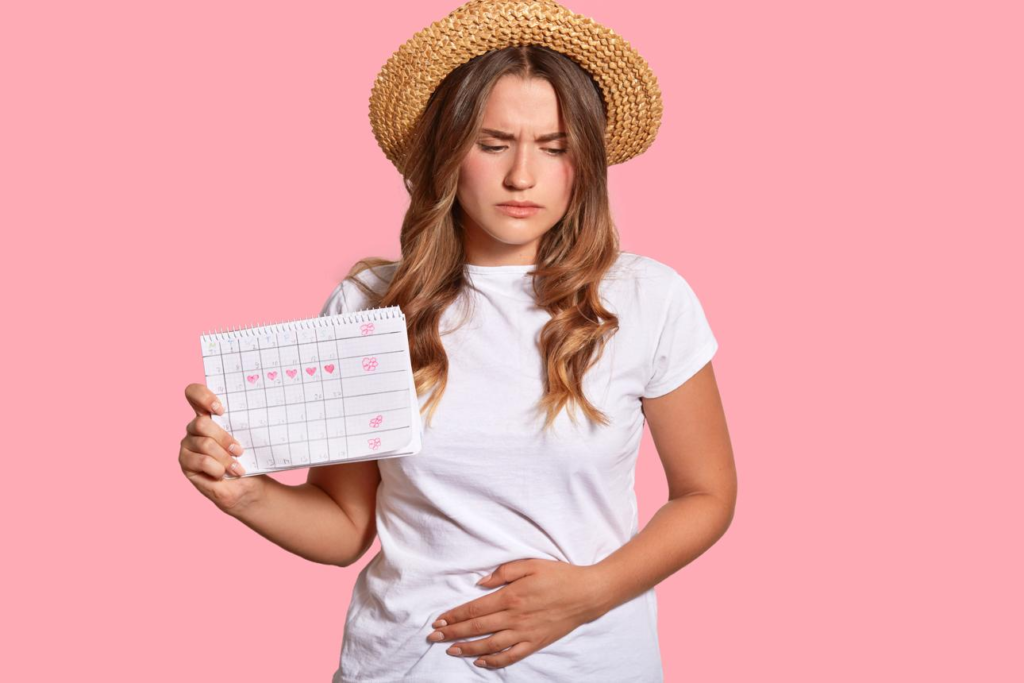
Have you ever stepped on the scale before your period and noticed that you’ve gained a few kilograms? Or maybe your stomach feels larger, your clothes fit tighter, and you wonder whether you’re experiencing weight gain or just period bloating.
Many women experience bloating and temporary weight fluctuations before and during their menstrual cycle. While these changes can feel frustrating, they are often a normal part of hormonal fluctuations and usually go away on their own.
Understanding the difference between period bloating and actual weight gain can help you feel more confident and avoid unnecessary stress.
What Is Period Bloating?
Period bloating is a common symptom of premenstrual syndrome (PMS). It occurs when hormonal changes cause the body to retain more water and affect digestion.
Many women notice bloating:
- A few days before their period
- During the first few days of menstruation
- Occasionally around ovulation
The abdomen may feel:
- Swollen
- Tight
- Puffy
- Uncomfortable
This bloating is usually temporary and improves as hormone levels stabilize.
What Causes Period Bloating?
Several factors contribute to menstrual bloating.
1. Hormonal Changes
Before your period, estrogen and progesterone levels fluctuate.
These changes can:
- Increase water retention
- Affect digestion
- Slow bowel movements
- Cause abdominal fullness
2. Water Retention
Hormonal shifts can cause the body to hold onto extra fluids.
This may result in:
- Puffy face
- Swollen fingers
- Tight-fitting clothes
- Temporary weight increase
3. Digestive Changes
Many women experience digestive symptoms before their period, including:
- Constipation
- Gas
- Increased appetite
- Changes in bowel habits
These symptoms can make the stomach appear larger even when body fat has not increased.
What Is Actual Weight Gain?
Weight gain occurs when body fat, muscle mass, or overall body weight increases over time.
Unlike bloating, true weight gain does not disappear within a few days.
Weight gain typically develops due to:
- Consuming more calories than the body uses
- Reduced physical activity
- Certain medical conditions
- Medication side effects
- Long-term lifestyle habits
Period Bloating vs Weight Gain: Key Differences
| Period Bloating | Weight Gain |
|---|---|
| Appears suddenly | Develops gradually |
| Often linked to menstrual cycle | Not tied to cycle timing |
| Mainly caused by water retention | Caused by increased body mass |
| Stomach feels swollen or tight | Body size increases over time |
| Usually lasts a few days | Persists for weeks or months |
| Often improves after period starts | Does not disappear after menstruation |
| Weight fluctuation is temporary | Weight increase remains |
Signs You’re Experiencing Period Bloating
You are more likely dealing with bloating if:
- Your stomach feels larger before your period
- Your weight increases temporarily
- Rings or shoes feel tighter
- Symptoms improve after menstruation begins
- You experience PMS symptoms such as cramps or mood changes
Signs It May Be Weight Gain
You may be experiencing actual weight gain if:
- Weight continues increasing over several weeks
- Changes are not related to your menstrual cycle
- Clothes remain tight throughout the month
- Body measurements steadily increase
- Weight does not return to normal after your period
How Much Weight Can Period Bloating Cause?
Many women notice temporary weight fluctuations of approximately:
- 0.5 to 2 kilograms
- Sometimes slightly more
This increase is usually due to water retention rather than body fat.
Once hormone levels normalize, the extra weight often disappears naturally.
How to Reduce Period Bloating
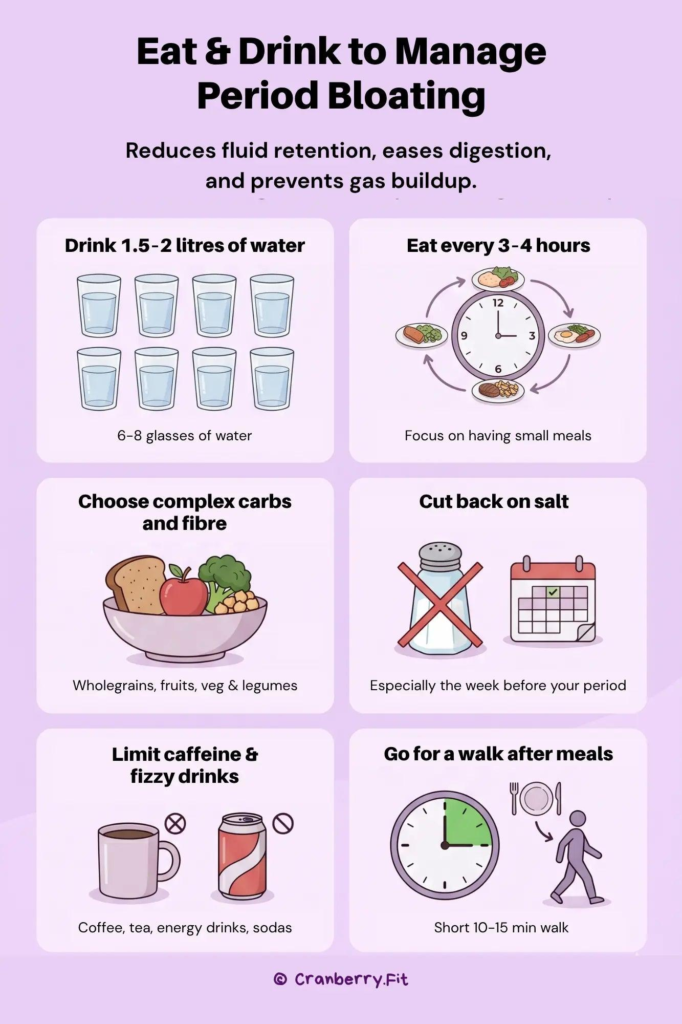
1. Drink More Water
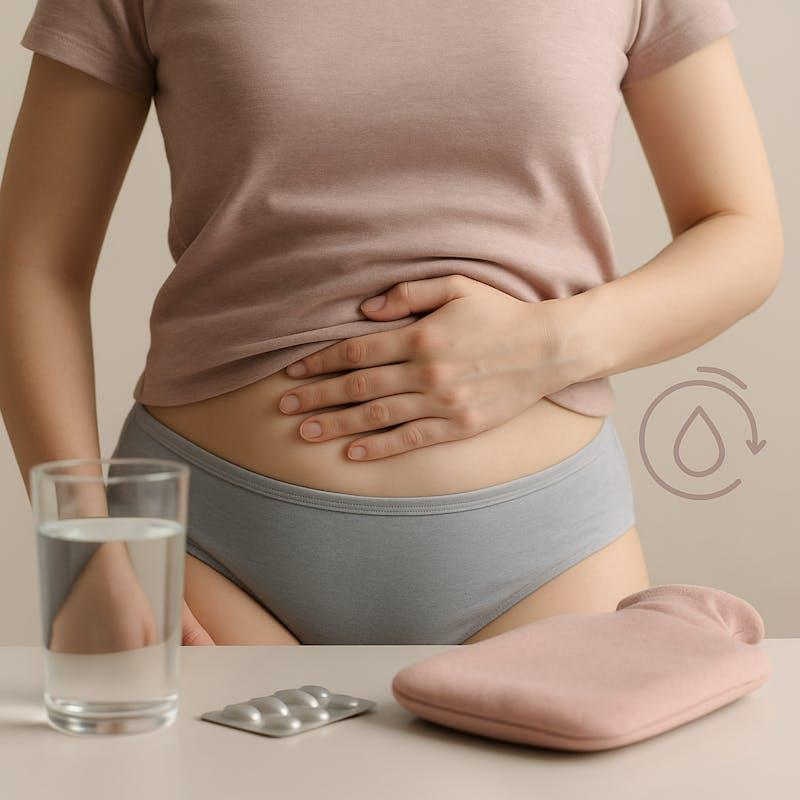
It may seem surprising, but staying hydrated can help reduce water retention.
2. Reduce Excess Salt
High sodium intake can worsen bloating.
Try limiting:
- Processed foods
- Packaged snacks
- Fast food
- Salty foods
3. Stay Active
Gentle exercise may help:
- Improve circulation
- Reduce water retention
- Support digestion
- Ease PMS symptoms
Good options include:
- Walking
- Yoga
- Stretching
4. Eat More Fiber
Fiber supports healthy digestion and may help reduce constipation-related bloating.
Good sources include:
- Fruits
- Vegetables
- Whole grains
- Legumes
5. Get Enough Sleep
Poor sleep may worsen PMS symptoms and increase stress-related water retention.
Aim for 7–9 hours of quality sleep each night.
Can Stress Make Bloating Worse?
Yes.
Stress increases cortisol levels, which can affect digestion and contribute to water retention.
Stress management techniques such as:
- Meditation
- Deep breathing
- Journaling
- Light exercise
may help reduce symptoms.
When Should You See a Doctor?
Occasional menstrual bloating is normal.
However, consider consulting a healthcare professional if:
- Bloating is severe
- Symptoms persist throughout the month
- You experience significant pain
- Rapid unexplained weight gain occurs
- Digestive symptoms become frequent
Persistent bloating can sometimes be related to other health conditions that require evaluation.
Final Thoughts
Period bloating and weight gain can look similar, but they are not the same. Period bloating is usually caused by hormonal changes, water retention, and digestive fluctuations, while true weight gain develops gradually and persists over time.
If your stomach feels larger or the scale increases slightly before your period, it’s often a temporary change rather than an increase in body fat. Paying attention to patterns throughout your cycle can help you better understand your body and avoid unnecessary worry.
Remember, your weight may naturally fluctuate during different phases of your menstrual cycle, and occasional changes are completely normal.